
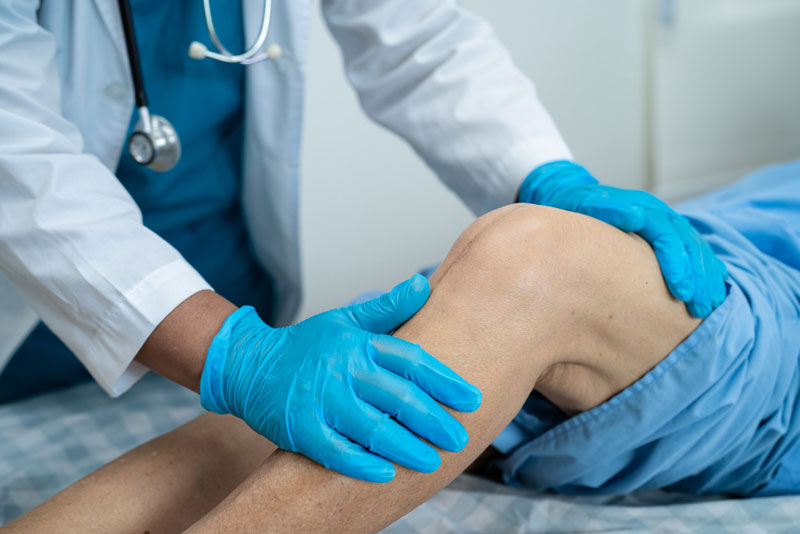
Total Knee Replacement (also known as Total Knee Arthroplasty) is one of the most successful orthopaedic surgical procedures performed around the world to alleviate chronic pain in the knee joint and restore mobility to patients suffering from severe knee joint damage.
The process consists of a replacement of damaged cartilage/bone with artificial implants that will restore normal joint function and quality of life. The precision of surgical procedures, the rate of recovery and the long-term results have been greatly enhanced thanks to the progress of robotic surgery, computer navigation, minimally invasive surgery and better rehabilitation programs.
India is now considered a preferred choice for undergoing TKR surgeries, due to the presence of internationally trained orthopaedic doctors, the presence of world class hospitals, advanced technology, shorter waiting times, and cost-effective treatment.
This guide will introduce you to the concept of Total Knee Replacement, who can undergo this surgery, the diagnosis required to undergo the procedure, the different available options and why thousands of international patients choose India for knee replacement surgery.
Chronic knee pain can make walking, climbing stairs, sitting or standing very challenging. Medications, physiotherapy, injections and lifestyle changes may help alleviate symptoms for a period of time, but will ultimately fail to help in cases of significant damage to the knee joint.
Total knee replacement (TKR) is a very successful surgical procedure that involves replacing the damaged knee joint with artificial replacements, allowing patients to have an active life with reduced pain and mobility. With current modern surgical methods and individualised rehabilitation plans, knee replacement is safer and more accurate than ever before and recovery is quicker.
International patients who want quality orthopaedic services can receive comprehensive treatment in India that includes experienced specialists, advanced surgical technology and dedicated international patient support services at a much less expensive cost than many of the western countries.
The surgery is called Total Knee Replacement (TKR). In this procedure the worn out or damaged surfaces of the knee joint are replaced by specially designed plastic, metal or high-quality polyethylene implants.
The surgery is suggested if the knee joint has been significantly damaged as a result of arthritis, injury, or other degenerative diseases, and the knee continues to cause pain and stiffness, as well as deformity and poor function without non-surgical treatments.
Total Knee Replacement is typically offered to patients whose knee joints are very severely damaged, and who still have significant symptoms after undergoing non-surgical options.
The most common reason for knee replacement. In osteoarthritis, the cartilage of the joint slowly wears away and leads to joint pain, stiffness, swelling and limited movement.
A condition that involves the chronic inflammation of the knee joint causing the cartilage, ligaments and bone to be damaged.
Arthritis that occurs following injuries to the ligaments or previous knee trauma or fracture.
Knee replacement surgery may be indicated for patients with bow legs (varus deformity), knock knees (valgus deformity) or severe joint deformity.
Because the blood supply to the bones around the knee is reduced, they may collapse and the joint may be destroyed and need to be replaced surgically.
If previous surgery (e.g. osteotomy or partial knee replacement) has not been effective, some patients may need a Total Knee Replacement.
Not all surgeries to replace the knee are performed the same way. The type of procedure will depend on the amount of joint damage, activity level, age, overall health, and bone quality. Your orthopaedic surgeon will design a plan for evaluation and recommend the best option.
The most common surgery is Total Knee Replacement. It means replacing the entire knee joint with artificial implants that include the shinbone (tibia), the thighbone (femur) and, if needed, the undersurface of the kneecap (patellar bone or patella).
It is recommended in patients who have severe, multiple joint damage to the knee from osteoarthritis, rheumatoid arthritis or advanced arthritis.
Also referred to as Uni-compartmental Knee Replacement, this surgery removes the damaged part of the knee without removing healthy cartilage, ligaments and bone. This less invasive option might be a better choice for patients who have arthritis in just one compartment of the knee and may require a smaller incision, less pain and a quicker recovery.
If both knees are severely affected with arthritis, the knees can be replaced in one procedure, or the surgeon might recommend a second procedure to replace the second knee at a later date depending on the patient condition.
Revision surgery is undertaken if the first knee replacement has worn out, become loose, has become infected, is unstable, or fractured around the implant. This is typically a more complicated process and will need special skills.
Robotic surgery is a type of surgery that utilizes advanced computer-guided technology to assist a surgeon in performing the surgery more precisely. The robotic system helps to position the implant accurately, align the implant and maintain healthy bone and soft tissue.
Advance technologies and specialized care
In the last 10 years there have been huge developments and transformations in the area of Modern Total Knee Replacement. The use of modern technology has improved the precision of surgery, the longevity of the implants, comfort of the patient and recovery.
The robot-assisted system can place the implants accurately, considering each patient’s unique knee anatomy. precision can help to align the joints, maintain healthy bone, and improve the overall function.
During surgery, computer assisted navigation helps to guide the surgeon to optimal implant positioning and lowers risk of positioning errors.
Individual surgical guides are developed on an individual basis with detailed MRI or CT images. This customized approach can enhance accuracy and efficiency in surgery.
The planning software is sophisticated and can simulate surgery before it happens, determine the correct implant size for the patient and fine-tune the alignment of the implant for the best result.
When appropriate, minimally invasive methods employ smaller incisions and less muscle and soft tissue disruption resulting in less pain, shorter hospital stays and faster recovery.
ERAS protocols are a range of evidence-based strategies, including optimized anaesthetic protocols, early mobilization, multimodal pain management and nutrition, that aim to promote improved prognosis and reduced complications.
Contemporary pain management strategies such as peripheral nerve blocks, local infiltration analgesia and multimodal analgesics allow for control of post-operative pain while allowing for early commencement of physiotherapy.
Modern implants are made from tough, biocompatible materials like cobalt-chromium alloys, titanium, ceramics and highly cross-linked polyethylene. The implants are made for the best function and longevity.
Immediately following surgery, a person begins recovery. Each patient is treated with individual physiotherapy, gait training, muscle strengthening exercises and mobility rehabilitation procedures, allowing for a return to confidence and to maximize long-term outcomes.
One of the most crucial stages of Total Knee Replacement is recovery. The success of the outcome relies not just on the surgery but also on rehabilitation, physiotherapy and patients’ involvement. The majority of patients start walking 24 hours after surgery and progressively improve their strength and mobility in the weeks after surgery.
Patients are monitored in the recovery room post procedure and then moved to a hospital room. Treatment of pain, early movement and prevention of complications start right away. To prevent blood clots, compression stockings, blood-thinning drugs and ankle exercises might be recommended.
The majority of patients are encouraged to rise to a stand and take their first steps with the help of a physiotherapist in the first 24 hours. Early mobilization benefits blood flow, decreases stiffness and facilitates recovery.
Close rehabilitation program should be strived for to restore knee function.
Physiotherapy aims to improve
As the patient improves and recovers from their illness, their exercises are gradually increased and advanced.
The hospital stay varies from 3 to 5 days depending on the patient’s health condition, type of surgery and recovery process and then return to daily activities.
Total Knee Replacement is a safe and very effective procedure. But, like with all big surgeries, there can be some risks and complications. These risks can be minimized by choosing a highly experienced surgical team, adhering to the rehabilitation guidelines, and regularly visiting the doctor after the surgery.
Infection is very rare but can happen around the surgical site or the man-made implant. This risk is minimized by strict sterilisation measures, the use of preventive antibiotics and the use of special operating rooms.
After surgery, some patients may have a decrease in knee flexibility. Physiotherapy and early rehabilitation are a key component in restoring movement.
The artificial implant can occasionally become loose or become worn with time, especially in active patients, over time. New implants are engineered to last for 15–25 years or longer, depending on the care provided.
Most patients find they have a lot of pain relief, although a small group of patients may have some minor pain from scar tissue, nerve sensitivity or other issues.
During the surgery, in very rare cases the nerves or blood vessels around the knee can be affected. There are very few complications and highly reviewed by experienced orthopaedic surgeons.
In rare instances, the fracture can occur around the artificial joint, especially if there is a fall or major trauma. Another treatment or revision surgery may be needed.
In rare cases, the fracture happens around the artificial joint, often as a result of a fall or a major injury. There may need to be further treatment or revision surgery.
India has become one of the world leading destination for orthopaedic surgery attracting thousands of international patient every year.
Patient choose India because of,
By combining advance medical expertise with compassionate patient care and cost-effective treatment, India continues to be a trusted destination for total knee replacement.
Patients who do not get better with medications, injections, or physical therapy and have severe arthritis, chronic knee pain, substantial stiffness and poor mobility may be good candidates.
Patients stay in the hospital for about 3-5 days depending on how they are doing and their overall health.
The majority of patients start standing and walking with help from a physiotherapist within 24 hours of surgery.
Typical patients improve greatly in 6–12 weeks and may be completely recovered, reaching maximum improvement, in 3–6 months.
Yes. The surgeon might decide to do a Bilateral Total Knee Replacement in carefully selected patients.
Yes. Physiotherapy is a vital component of recovery and will assist in regaining strength, flexibility, balance and normal walking.
Yes, Most of international patients are able to get home with clearance from their surgeon. We will guide you on the safest travel time and precautions to take.
Yes, with rehabilitation and strengthening of muscles, most patients are able to walk up the stairs comfortably again.
The use of a robot in surgery provides more accurate placement and positioning of the implants. But the best way will depend on each patient’s condition and your surgeon’s diagnosis.
The implant is chosen according to your level of activity, bone quality, age and health. Your orthopaedic surgeon will determine what is best for you depending on your needs.
The price of treatment depends on the hospital, kind of implant, surgical method and the specific needs of the patient. Customized quote is given prior to treatment.
Yes. Our orthopaedic specialists provide telemedicine consultations, as well as follow-up reports and X-rays to make sure you continue to improve after you get home.
One of the most effective orthopaedic surgeries for the relief of chronic knee pain, increased mobility and quality of life is Total Knee Replacement.
As surgery becomes more robotic, implants more precise and rehabilitation more comprehensive, patients can look forward to excellent long-term outcomes and a quicker return to normal life.
India is the perfect destination for international patients by providing experienced orthopaedic surgeons, internationally accredited hospitals, state-of-the-art surgical technology, patient support services, and affordable treatment.
We will always provide safe, personalized and caring treatment from the initial consultation through to the long term follow up.
Category : Total Knee Replacement
